Foundations: AI Transformation
What AI transformation actually is, and the groundwork an owner needs before spending a dollar on it.
Why Start Here
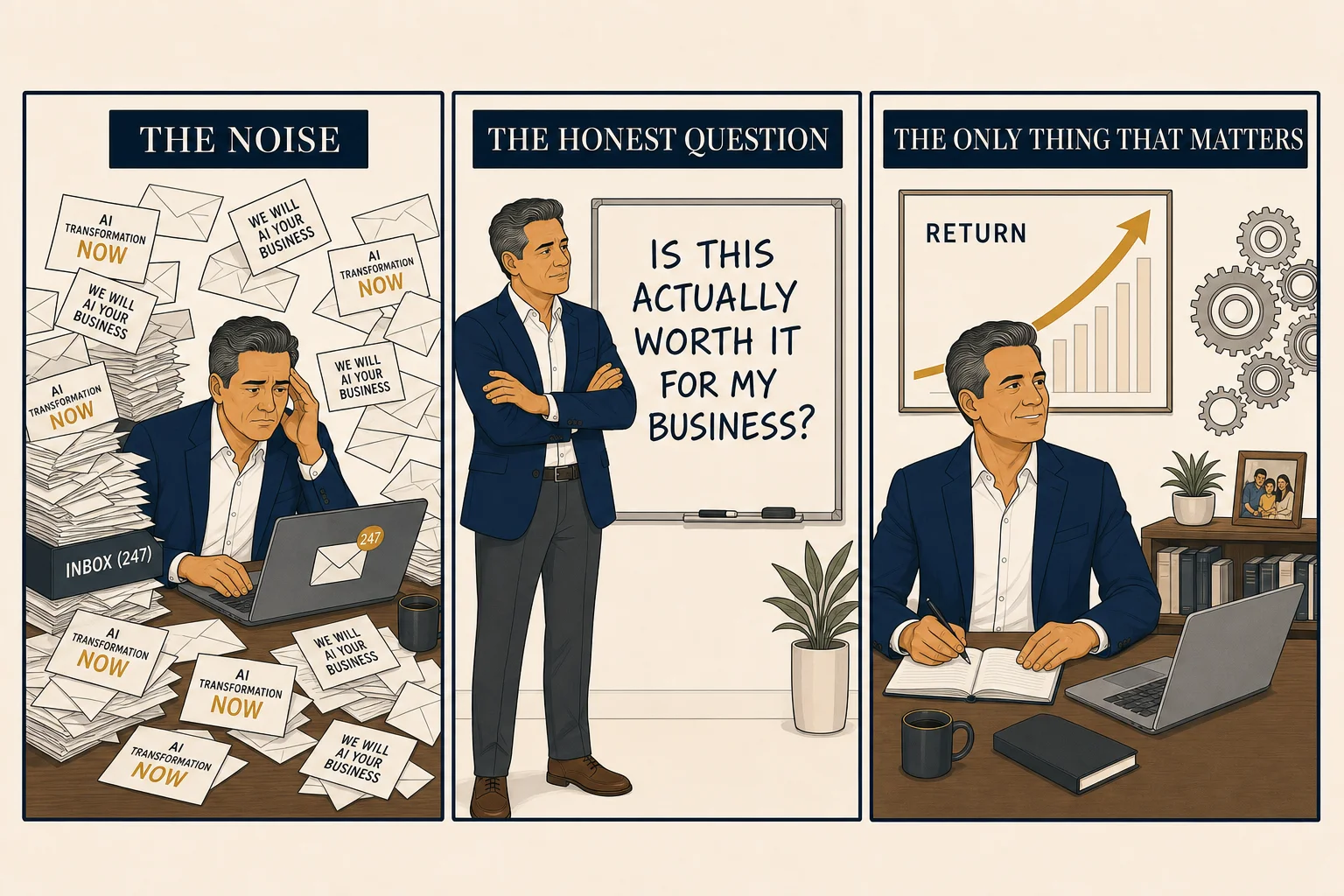
The loudest message in business right now is that you must transform with AI immediately or get left behind. Most of that message is being sold by people who profit when you act on it. This section builds the shared language and the basic mental model so the rest of the wiki makes sense, without the hype. It does not assume you have a budget, a vendor, or even a firm decision to transform. It assumes only that you run a real company and want to understand, honestly, whether and how AI is worth it for you.
What These Pages Cover
The Foundations pages move from definition to honest assessment. What Is AI Transformation defines the thing itself and separates a real operating-model change from a tool you bolt on. Why AI Now Sets Your Ceiling explains how AI became a variable that shapes what a company is worth, and why that pushes the bar for a serious operation past clean financials. When a term is unfamiliar anywhere on the site, the Glossary is the first stop.
The Honest Frame
The one thing worth saying up front, and then setting aside, is the payoff: done right, AI transformation should produce higher revenue, more operational efficiency, and, should you ever sell, a higher multiple. That is the whole commercial case. Everything else on this site is about the harder question underneath it: what is actually worth doing in your specific business, and what is hype you should ignore.
Because the honest answer for many companies is "not yet, or not much," this section treats restraint as a first-class option. Knowing you should wait is a valid and valuable result, covered in Not Every Company Needs AI.
How to Use This Section
Read these pages in order if you are new. If you already know the basics, treat Foundations as a reference layer that the deeper pages in Concepts and Perspectives link back to. Start with the Perspectives once you want the opinionated, no-BS takes.